Politik Luar Negeri Bebas Aktif Indonesia: Makna, Sejarah, dan Tantangannya
Politik luar negeri bebas aktif sering diringkas sebagai sikap Indonesia yang tidak memihak blok mana pun. Ringkasan itu tidak sepenuhnya salah, tetapi belum menjelaskan keseluruhan maknanya. Prinsip ini bukan izin untuk bersikap netral terhadap setiap persoalan dan bukan pula alasan untuk menjauh dari konflik internasional. Indonesia ingin menentukan sikapnya sendiri, sekaligus ikut membentuk penyelesaian yang sejalan dengan kepentingan nasional, perdamaian, kemerdekaan, dan keadilan sosial.
Gagasan tersebut kembali ditegaskan Ketua MPR RI Ahmad Muzani dalam Sidang Tahunan MPR pada 14 Agustus 2026. Ia menghubungkan kedaulatan dengan kemampuan negara menentukan arah, melindungi wilayah dan rakyat, mengelola kekayaan alam, serta mengambil posisi berdasarkan kepentingan dan prinsip yang diyakini. Pernyataan itu penting bukan karena melahirkan doktrin baru, melainkan karena menunjukkan bagaimana prinsip yang dirumuskan pada awal kemerdekaan terus digunakan untuk membaca dunia yang semakin terfragmentasi.
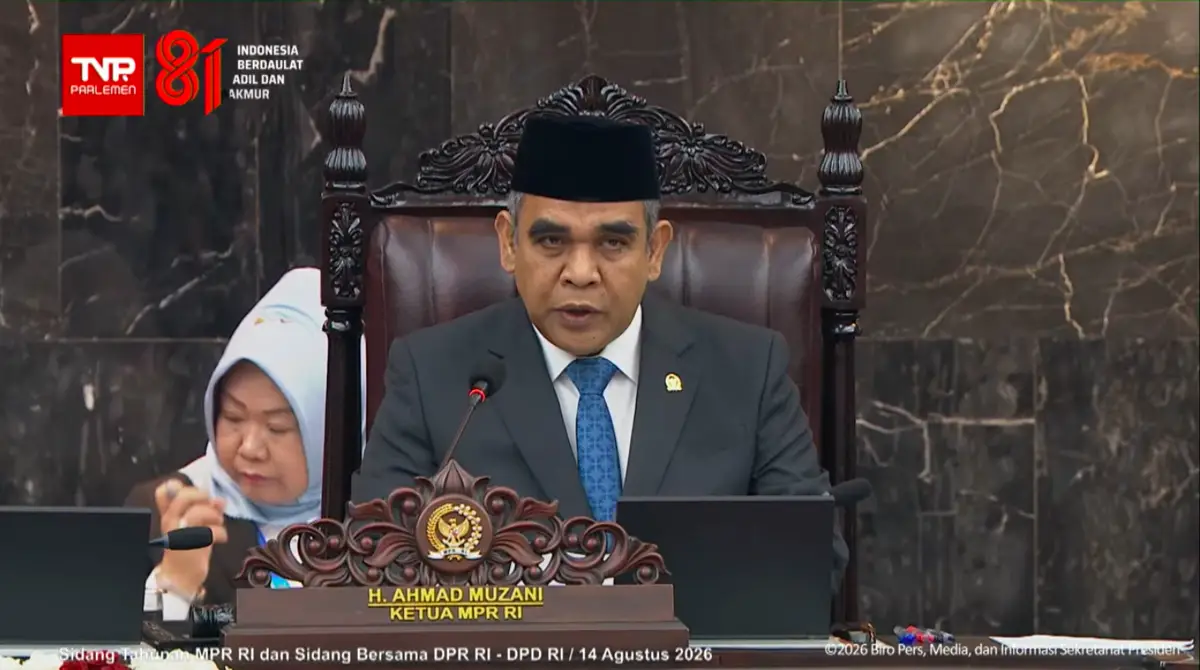 |
| Ketua MPR RI Ahmad Muzani dalam Sidang Tahunan MPR 2026. Tangkapan layar: Sekretariat Presiden. |
Apa Itu Politik Luar Negeri Bebas Aktif?
Dalam penjelasan Undang-Undang Nomor 37 Tahun 1999 tentang Hubungan Luar Negeri, “bebas aktif” bukan politik netral. Bebas berarti Indonesia tidak terikat secara apriori pada satu kekuatan dunia dan dapat menentukan sikap terhadap persoalan internasional. Aktif berarti Indonesia tidak tinggal diam, tetapi ikut berkontribusi dalam penyelesaian konflik dan persoalan dunia.
Dengan demikian, terdapat dua unsur yang harus berjalan bersama:
- Kemandirian: keputusan luar negeri tidak ditentukan oleh tekanan atau kepentingan negara besar.
- Partisipasi: Indonesia tetap menggunakan diplomasi, organisasi internasional, mediasi, bantuan kemanusiaan, dan kerja sama untuk memengaruhi keadaan.
Apabila hanya menekankan kata “bebas”, Indonesia berisiko menjadi pasif. Apabila hanya mengejar keaktifan tanpa kemandirian, Indonesia dapat terseret menjadi pengikut agenda kekuatan lain. Nilai utama doktrin ini justru terletak pada keseimbangan keduanya.
Dari Mana Prinsip Bebas Aktif Berasal?
Kerangka politik bebas aktif dikaitkan dengan pidato Mohammad Hatta, Mendayung Antara Dua Karang, yang disampaikan di depan Badan Pekerja Komite Nasional Indonesia Pusat pada 2 September 1948. Menurut Kementerian Luar Negeri RI, prinsip dasarnya muncul ketika persaingan Amerika Serikat dan Uni Soviet membuat negara-negara baru menghadapi tekanan untuk memilih salah satu blok.
Hatta menolak gagasan bahwa Indonesia harus menjadi objek dalam pertarungan kekuatan besar. Negara yang baru merdeka harus menjadi subjek yang menentukan sikap dan tujuannya sendiri. Karena itu, “mendayung” adalah bagian penting dari metafora tersebut: Indonesia tidak cukup menghindari dua karang, tetapi harus memiliki tujuan dan menggerakkan kapalnya sendiri.
Konteks dunia kini berbeda dari 1948. Uni Soviet telah bubar dan persaingan tidak lagi semata-mata bersifat ideologis. Namun, tekanan untuk memilih tetap muncul dalam bentuk lain: persaingan Amerika Serikat dan Tiongkok, rantai pasok teknologi, mineral kritis, keamanan maritim, standar digital, investasi, serta konflik geopolitik. Inilah alasan bebas aktif masih relevan, meskipun penerapannya perlu menyesuaikan perubahan zaman.
Apa Landasan Politik Luar Negeri Indonesia?
Politik luar negeri Indonesia tidak hanya bersumber dari pidato atau kebiasaan diplomatik. Alinea keempat Pembukaan UUD 1945 menempatkan partisipasi dalam ketertiban dunia yang berdasarkan kemerdekaan, perdamaian abadi, dan keadilan sosial sebagai salah satu tujuan negara. Prinsip bebas aktif kemudian ditegaskan dalam UU Nomor 37 Tahun 1999.
| Landasan | Makna bagi politik luar negeri |
|---|---|
| Pembukaan UUD 1945 | Indonesia memiliki mandat untuk ikut menciptakan ketertiban dunia, perdamaian, kemerdekaan, dan keadilan sosial. |
| UU Nomor 37 Tahun 1999 | Indonesia bebas menentukan sikap dan aktif berkontribusi dalam penyelesaian persoalan internasional. |
| Kepentingan nasional | Diplomasi harus melindungi kedaulatan, keselamatan WNI, kesejahteraan, dan ruang kebijakan Indonesia. |
| Nilai antikolonial dan kemanusiaan | Indonesia menolak penjajahan, agresi, dan penyelesaian sengketa melalui pemaksaan. |
Landasan tersebut memperlihatkan bahwa kepentingan nasional dan nilai tidak harus selalu dipertentangkan. Kepentingan nasional menjelaskan apa yang perlu dilindungi, sedangkan konstitusi membatasi cara dan tujuan yang patut ditempuh.
Apakah Bebas Aktif Sama dengan Netral?
Tidak. Negara netral, terutama dalam pengertian hukum perang, memiliki kedudukan dan kewajiban tertentu untuk tidak terlibat dalam konflik bersenjata. Politik bebas aktif adalah pedoman umum untuk menentukan kebijakan luar negeri. Indonesia dapat mengambil sikap tegas terhadap suatu persoalan, memberikan suara di forum internasional, membantu misi perdamaian, atau mengecam pelanggaran prinsip tertentu tanpa otomatis bergabung dengan sebuah blok militer.
Perbedaan lainnya, bebas aktif juga tidak sama dengan “bebas nilai”. Pemerintah tetap terikat pada konstitusi, hukum internasional, dan kepentingan nasional. Karena itu, tidak memihak blok bukan berarti menganggap semua tindakan negara lain sama benarnya.
Bagaimana Prinsip Bebas Aktif Diterapkan?
Penerapan politik bebas aktif dapat terlihat dalam beberapa bentuk. Salah satu tonggak sejarahnya adalah Konferensi Asia Afrika 1955. Pertemuan tersebut mempertemukan negara-negara dengan sistem politik dan kepentingan yang berbeda untuk membahas kolonialisme, kerja sama, kedaulatan, dan penyelesaian sengketa secara damai. Dasasila Bandung yang dihasilkan menekankan penghormatan terhadap kedaulatan, tidak mencampuri urusan dalam negeri negara lain, tidak menggunakan ancaman kekuatan, serta menyelesaikan perselisihan melalui cara damai.
Semangat serupa kemudian terlihat dalam peran Indonesia di Gerakan Non-Blok, pembentukan ASEAN, diplomasi multilateral, pengiriman personel dalam misi pemeliharaan perdamaian PBB, dan upaya memperluas hubungan dengan negara yang saling bersaing. Contoh-contoh tersebut menunjukkan bahwa bebas aktif bukan sekadar menjaga jarak, tetapi menciptakan ruang agar Indonesia tetap dapat bekerja sama dengan banyak pihak.
Mengapa Ahmad Muzani Mengangkatnya Kembali?
Dalam Sidang Tahunan MPR 2026, Ahmad Muzani menempatkan politik luar negeri bebas aktif dalam pembahasan yang lebih luas mengenai kedaulatan. Menurutnya, kedaulatan bukan hanya soal batas wilayah, tetapi juga kemampuan negara menentukan jalan, melindungi rakyat, mengelola kekayaan alam, dan mengambil sikap berdasarkan kepentingan nasional.
Pernyataan tersebut dapat dibaca sebagai penegasan, bukan perubahan kebijakan. Ketika persaingan kekuatan besar memasuki sektor perdagangan, teknologi, energi, dan pertahanan, kedaulatan juga bergantung pada kemampuan negara menjaga pilihan kebijakannya. Sebuah negara mungkin tetap memiliki wilayah yang utuh, tetapi ruang geraknya dapat menyempit apabila terlalu bergantung pada satu pasar, sumber teknologi, pembiayaan, atau pemasok strategis.
Tantangan Bebas Aktif di Tengah Persaingan Amerika Serikat dan Tiongkok
Persaingan Amerika Serikat dan Tiongkok memperlihatkan ujian praktis politik bebas aktif. Indonesia memiliki kepentingan ekonomi besar dengan Tiongkok, sekaligus mempertahankan kerja sama perdagangan, pendidikan, teknologi, dan keamanan dengan Amerika Serikat serta mitra lainnya. Memilih satu pihak secara kaku dapat mengurangi pilihan Indonesia, tetapi menghindari setiap keputusan juga bukan strategi.
Dalam praktiknya, bebas aktif membutuhkan penilaian isu demi isu:
- Dalam perdagangan dan investasi, Indonesia perlu menarik modal tanpa kehilangan kemampuan mengatur industri nasional.
- Dalam teknologi, kerja sama dibutuhkan, tetapi ketergantungan pada satu penyedia dapat menimbulkan risiko keamanan dan ekonomi.
- Dalam keamanan maritim, Indonesia perlu mempertahankan hak berdaulat tanpa menjadikan wilayahnya bagian dari konfrontasi antarkekuatan besar.
- Dalam konflik internasional, sikap harus konsisten dengan hukum internasional dan perlindungan warga sipil, bukan semata-mata kedekatan politik.
Karena itu, bebas aktif lebih tepat dipahami sebagai strategi mempertahankan otonomi, bukan formula untuk selalu mengambil posisi di tengah.
Apa Kelemahan yang Sering Muncul dalam Penerapannya?
Keluwesan bebas aktif merupakan kekuatan sekaligus kelemahan. Karena dapat ditafsirkan secara luas, pemerintah yang berbeda bisa menggunakannya untuk membenarkan kebijakan yang berbeda pula. Tanpa ukuran yang jelas, istilah ini berisiko menjadi slogan yang diulang setiap kali Indonesia tidak ingin menjelaskan pilihan strategisnya secara terperinci.
Setidaknya ada empat pertanyaan yang dapat digunakan publik untuk mengujinya:
- Kepentingan siapa yang dilindungi? Apakah keputusan benar-benar memberi manfaat publik atau hanya menguntungkan kelompok tertentu?
- Seberapa mandiri pilihannya? Apakah Indonesia mempunyai beberapa alternatif atau bergantung pada satu mitra?
- Apa kontribusi aktifnya? Apakah Indonesia menawarkan inisiatif dan solusi, atau hanya menghindari posisi?
- Apakah konsisten dengan konstitusi? Apakah kebijakan mendukung perdamaian, kemerdekaan, dan keadilan sosial?
Mengapa Menolak Perang Saja Belum Cukup?
Penolakan terhadap perang sejalan dengan amanat konstitusi dan tradisi diplomasi Indonesia. Namun, seruan damai baru memiliki dampak apabila disertai tindakan: mendorong perundingan, memperkuat hukum internasional, membantu korban, mendukung mekanisme multilateral, atau menawarkan jalur komunikasi di antara pihak yang berselisih.
Di sinilah unsur “aktif” diuji. Keberhasilan diplomasi bukan hanya dinilai dari seberapa sering Indonesia menyatakan tidak memihak, melainkan dari kemampuannya mengubah hubungan luas menjadi pengaruh yang nyata.
Analisis BIN ENJAH: Bebas Aktif Harus Menghasilkan Daya Tawar
Politik bebas aktif tetap relevan, tetapi relevansi historis saja tidak cukup. Di tengah persaingan teknologi, energi, dan rantai pasok, kemandirian diplomatik membutuhkan fondasi ekonomi dan institusi yang kuat. Negara yang terlalu bergantung pada pembiayaan, pasar ekspor, pangan, energi, atau teknologi dari satu pihak akan kesulitan mempertahankan kebebasan memilih.
Karena itu, kebijakan luar negeri tidak dapat dipisahkan dari kebijakan industri, kualitas sumber daya manusia, kemampuan riset, ketahanan energi, dan tata kelola sumber daya alam. Hubungan dengan “seribu teman” memang memperluas pilihan, tetapi jumlah mitra tidak otomatis menciptakan daya tawar. Daya tawar muncul ketika Indonesia memiliki kapasitas, aturan yang konsisten, dan tujuan nasional yang jelas.
Pernyataan Ahmad Muzani sebaiknya dibaca sebagai pengingat terhadap standar tersebut. Kedaulatan bukan hanya kemampuan mengatakan “tidak” kepada tekanan luar, tetapi juga kemampuan menyediakan alternatif ketika keputusan sulit harus diambil.
Kesimpulan
Politik luar negeri bebas aktif berarti Indonesia menentukan sikapnya secara mandiri dan tetap berkontribusi terhadap penyelesaian persoalan dunia. Prinsip ini bukan netralitas permanen, bukan sikap tanpa nilai, dan bukan alasan untuk pasif. Akar historisnya berasal dari upaya Mohammad Hatta menjaga Indonesia agar tidak menjadi objek persaingan kekuatan besar, sedangkan landasan hukumnya terdapat dalam Pembukaan UUD 1945 dan UU Nomor 37 Tahun 1999.
Dalam dunia yang kembali terpolarisasi, tantangannya bukan sekadar mempertahankan semboyan. Indonesia perlu menerjemahkan bebas aktif menjadi diversifikasi kemitraan, konsistensi terhadap hukum internasional, inisiatif perdamaian, serta kemampuan ekonomi dan teknologi yang menjaga kebebasan mengambil keputusan.
Pertanyaan Umum tentang Politik Luar Negeri Bebas Aktif
Apa pengertian politik luar negeri bebas aktif?
Politik luar negeri bebas aktif adalah prinsip yang memberi Indonesia kebebasan menentukan sikap tanpa terikat pada satu kekuatan dunia, sekaligus mendorong partisipasi aktif dalam penyelesaian konflik dan persoalan internasional.
Siapa yang mencetuskan politik luar negeri bebas aktif?
Prinsip tersebut dirumuskan Mohammad Hatta melalui pidato Mendayung Antara Dua Karang pada 2 September 1948, ketika Indonesia menghadapi tekanan persaingan Blok Barat dan Blok Timur.
Apakah bebas aktif berarti Indonesia selalu netral?
Tidak. Indonesia dapat mengambil sikap terhadap suatu konflik atau pelanggaran hukum internasional. Bebas aktif berarti sikap tersebut ditentukan secara mandiri, bukan karena mengikuti sebuah blok.
Apa landasan politik luar negeri bebas aktif?
Landasannya mencakup tujuan negara dalam Pembukaan UUD 1945 dan ketentuan UU Nomor 37 Tahun 1999 tentang Hubungan Luar Negeri.
Apa contoh penerapan politik bebas aktif Indonesia?
Contohnya meliputi penyelenggaraan Konferensi Asia Afrika, keterlibatan dalam Gerakan Non-Blok dan ASEAN, diplomasi multilateral, serta partisipasi Indonesia dalam misi pemeliharaan perdamaian.
Mengapa politik bebas aktif masih relevan?
Prinsip ini membantu Indonesia menjaga ruang kebijakan di tengah persaingan kekuatan besar, sambil tetap membangun kerja sama luas dan berkontribusi terhadap perdamaian dunia.
Apa perbedaan bebas aktif dan politik tidak memihak?
Tidak memihak terutama menggambarkan penolakan terhadap keterikatan pada blok tertentu. Bebas aktif lebih luas karena juga menuntut Indonesia mengambil inisiatif dan berkontribusi dalam penyelesaian masalah internasional.
Post a Comment for "Politik Luar Negeri Bebas Aktif Indonesia: Makna, Sejarah, dan Tantangannya"